Lovable alternative
The Lovable alternative for apps that leave the demo stage
Describe the product; the developer agent scaffolds a real full-stack project, shows a live preview while it works, and publishes with a custom domain when you say ship.
- FULL-STACK SCAFFOLD
- VISUAL EDITS
- MANAGED HOSTING
- TWO-WAY GITHUB SYNC
Genspark vs. Lovable at a glance
6 dimensionsBoth turn prompts into working web apps. The differences are in what happens after the first build — editing, shipping, and the workspace around the project.
| Dimension | Genspark | Lovable |
|---|---|---|
| What it builds | Websites, full-stack apps, games, and native-style projects from separate starters | Web apps with backend integrations |
| Reviewing changes | Live preview with visual edits that write back to source | Live preview with chat-driven edits |
| Publishing | Share links, managed hosting with SSL, custom domains purchasable in-product | Built-in publishing with custom domains |
| GitHub | Two-way sync, plus import an existing repo to start | Repo export and sync |
| Design inputs | Hand off from Genspark Design; attach reference images and design files | Prompts and image references |
| Beyond the app | Slides, sheets, docs, and media agents on the same account | Focused on app building |
Comparison reflects each product's publicly documented features as of August 2026 and may change. Lovable is a trademark of its owner; Genspark is not affiliated with Lovable.
Point at the pixel, change the code
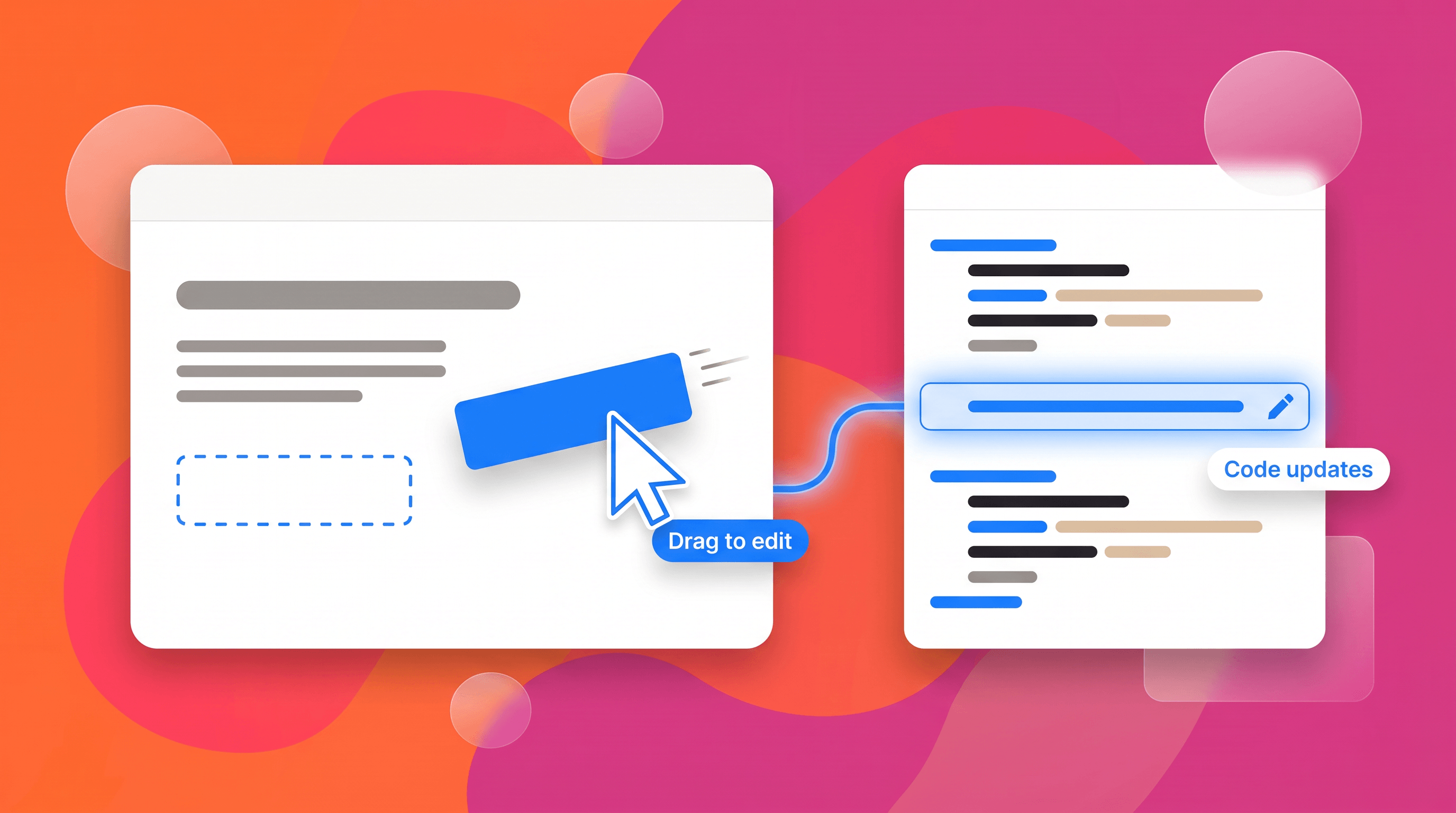
The live preview is a real editing surface: click an element, move it, retype it — and the change propagates back into the source. You review a working app, not a chat log about one.
When you'd rather talk, plain language still works: describe the change and watch the preview update.
The unglamorous launch steps, handled
The gap between a generated app and a launched product is hosting, domains, data, and version control. That's the part built in.
- 01
Real backend from day one
Full-stack projects scaffold with a database and file storage wired in — not a static mock waiting for a rewrite.
- 02
Publish in one step
A free public share link for demos, or managed hosting with SSL when it's real.
- 03
A domain without the detour
Connect a custom domain — or buy one inside the product and skip the registrar tab entirely.
- 04
GitHub keeps you portable
Two-way sync means the code lives in your repository from the first commit. Leaving is a clone, not an export.
Want the product tour instead? See the AI app builder page.
When Lovable stays the better pick
Lovable is a strong, focused builder. Keep it if these describe you.
You're deep in its integration recipes
If your projects lean on Lovable's established integration patterns and community examples, that accumulated know-how has real value.
You want the narrowest possible tool
Lovable does one thing with very little surface area. Genspark wraps the builder in a workspace — more capability, more to ignore if you don't need it.
Your team standardized on it
Shared conventions and existing deployments are switching costs. Run one real project on both before moving anything that matters.
Questions people ask
Is Genspark a good Lovable alternative?
If you like Lovable's promise — describe an app, get an app — Genspark keeps that promise and extends the ending: a scaffolded backend, visual editing on the live preview, managed hosting, in-product domains, and two-way GitHub sync. The honest test is to give both the same brief and compare what you'd actually launch.
Do I need to know how to code?
No. The agent writes and revises the code from plain language, and visual edits handle the small stuff. If you do code, the GitHub sync means you can drop into the repo at any point.
Can it handle a real backend, or only front-ends?
Full-stack is a dedicated project type with a database and file storage scaffolded from the start, so sign-ups, saved data, and admin views are normal requests rather than workarounds.
How do I get my project out if I switch later?
Your project syncs two-way with GitHub from the beginning, so the code is already yours, in your repository, in standard frameworks. There's no proprietary format to escape.